Key Facts
Emissions Drive 90% of Supply Chain Impact
Our biggest risks are outside your factory walls
Data in one place
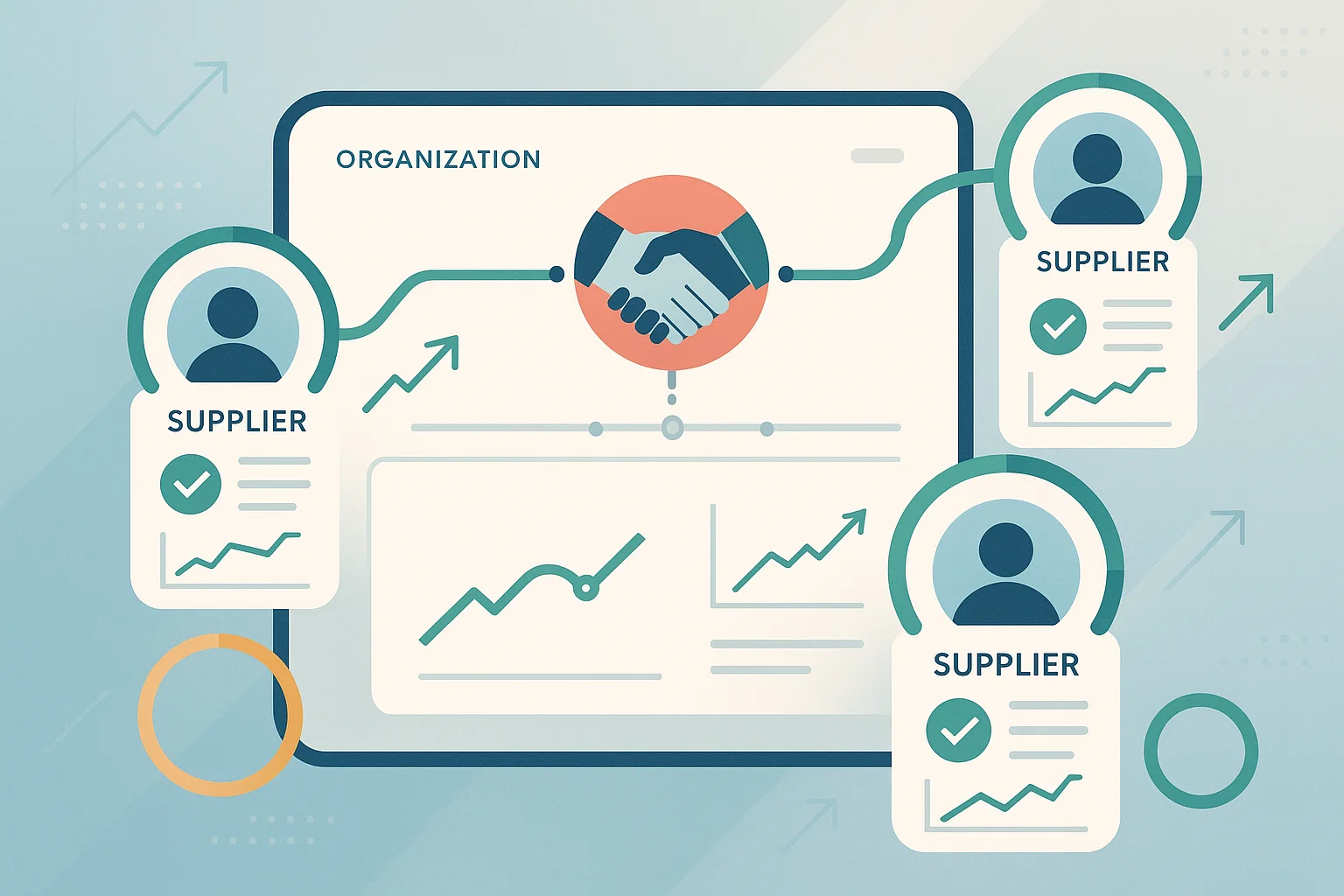
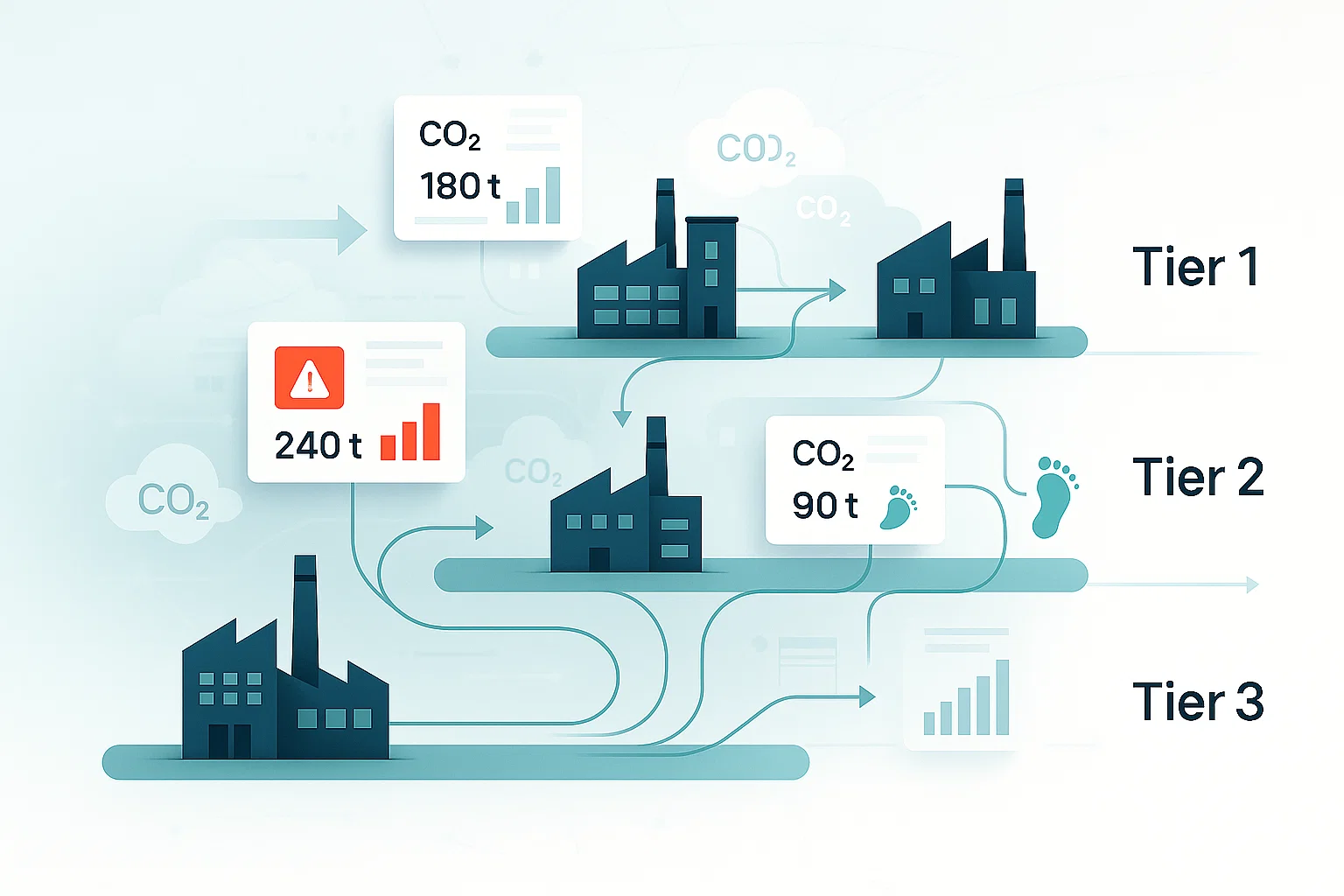
Over 90% of a company’s climate impact lies in its supply chain. Evaluating suppliers based only on cost and delivery misses emissions, energy use, waste, and ESG risks—where the real impact lies.
Supply chain emissions are 11.4x higher than direct operational emissions.
Sustainable Suppliers Lower Business Risk
Low-carbon suppliers = fewer disruptions
Reduced risk of disruptions, non-compliance and hidden costs
Suppliers with strong sustainability practices face fewer regulatory penalties, fewer resource-related disruptions, and are more resilient to future carbon costs.
Climate-related supply chain disruptions can cut company earnings by up to 30%.
ESG-Ready Suppliers Win More Contracts
Being sustainable isn’t a badge — it’s a business advantage.
Cost savings and operational efficiency gains
Companies are now prioritizing suppliers with credible carbon data, certifications, and reduction targets. Evaluating suppliers on ESG metrics helps organizations meet CSRD, BRSR Core, and Scope 3 regulations.
7 out of 10 global buyers prefer suppliers with transparent sustainability disclosures.
Enhanced Innovation & Strategy
Use supplier base as source of sustainability, growth and differentiation
Greater alignment with sustainability, innovation and strategic value
Evaluating suppliers across the value chain allows firms to surface opportunities for innovation (e.g., low-carbon materials), align procurement with sustainability goals, and leverage suppliers as strategic partners
Build sustainable brand value